
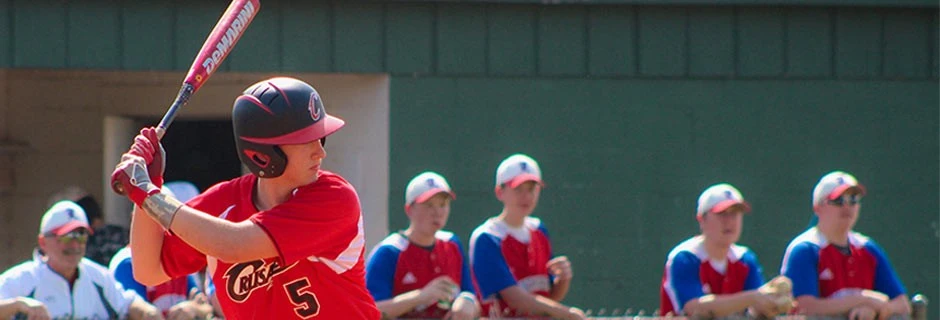
Success at the plate often comes down to this: making consistent hard contact against live pitching. To do this, it's important to swing the right bat for you. That means a bat that's long enough to cover the strike zone, light enough to swing with ease and heavy enough to generate power.
The table below is a general guide for determining your bat size based on your height and weight. Please remember when choosing your bat that this is just a general guide. Your personal preference should play a role in the size of bat you choose as you may be more comfortable with a lighter bat for a quicker swing or a heavier bat for more pop.
Selcting Your Ideal Bat Size and Weight
Here are three steps to finding the ideal baseball bat in terms of size and weight:
- Place the bottom of the bat in the center of your chest, pointing it to the side, parallel to your outstretched arm. If you can comfortably reach the top of the bat with your fingertips, the bat is the right length.
- Position the bottom of the bat in the center of your chest, facing outward. If your arm can reach out and grab the barrel of the bat, then it is the correct length.
- Stand the bat up against the side of your leg. If the end of the bat reaches the center of your palm when you reach down, it's the appropriate length.

BUYER’S TRICK: To determine if a bat is too heavy, here's a simple trick. Hold the bat handle and extend your arm away from your side. If you can't hold the bat extended for 30-45 seconds, the bat might be too heavy for you.
About the Knob of a Baseball Bat
Helps keep the bat from slipping out of a batter's hand; Also helpful for hanging on a bat rack for storage. In addition to the barrel, taper and handle, a bat's knob can also vary by design. These differences can lend themselves more to different hitting styles. Check out this chart to see a useful comparison of bat knobs.
 |
STANDARD |
Standard wood bat knobs closely resemble the knobs found on metal baseball bats. This can be a good option for newcomers to wood bat leagues. |
 |
TAPERED |
Tapered knobs are a popular, common option when choosing wood bats. This style features a smooth, flared transition from knob to handle. |
 |
BELL |
Bell knobs are slightly larger and have more mass than other knobs. They serve as a counterweight for batters. They create more whip and swing speed through the zone. |
 |
CONE |
Cone knobs feature a slow, gradual transition from handle to knob-allowing for an ergonomic, comfortable feel. It is a popular choice for players coming off of injury. |
About Batting Grips
Sometimes covered by tape or a bat gripping aid, this is where a batter will place his or her hands when swinging. There are a variety of gripping aids available to help you maintain an optimal hold on your wood bat:
Batting Gloves
Think of baseball batting gloves as similar to those who use a glove for golfing, but they're frequently used by both hands. Widely used across baseball and softball, batting gloves are ideal for hitters who take lots of batting practice.
If you want to avoid calluses and blisters, batting gloves allow you to practice and perfect your swing. They're also perfect for those warmer or even rainier days when the bat can get a little slick and hard to handle.
Bat Grips
Tailored grips come in a variety of widths, designs and colours, like the ones we sell from Lizard Grips. Batters use them on either alloy or wooden bats alike. Bat grips are vital for control, confidence and reducing sting, helping players swing harder while keeping the bat secure in all weather conditions.
Lizard Skins grips use a Durasoft Polymer for a tacky, comfortable feel that outperforms traditional rubber wraps. They come in multiple thicknesses: 0.5 mm for pro-level feel on wood bats, 1.1 mm as an all-round option, and 1.8 mm for maximum cushioning and vibration dampening, ideal for youth or anyone wanting more comfort. With a huge choice of colours and patterns available, you can match your grip to your bat and team style.
Pine Tar & Tack
Bat accessories help players customise feel, protect their investment and get more performance from every swing. From bat grips and tapes to pine-tar alternatives and cleaning products, these extras add comfort, tack and durability game after game.
Our Lizard Skins Grip Boost batting gel is a quick-drying, alcohol-based formula that delivers a clean, high-tack grip without the mess of traditional pine tar. Shop Lizard Skins Grip Boost here: for extra control, easy removal with water and consistently confident swings in all conditions.
About the Taper on a Baseball Bat
This section is where the thinnest part of the bat's handle transitions into the wider barrel. Much like the grip, the taper is not an ideal area of the bat to make contact with the ball.
About the Barrel of a Baseball Bat
The barrel is the thick, flared end of the bat where you’re meant to make clean contact with the ball. A larger barrel generally gives you a bigger sweet spot and more forgiveness on off‑centre hits, while a smaller barrel can feel quicker through the zone and is often preferred by contact‑oriented hitters. The barrel’s diameter, material and construction also affect swing weight, “pop,” and how far the ball carries when you square it up.
About the End of a Baseball Bat
The end, essentially, finishes off the barrel. Some wood bats have "cupped," or concave, ends to reduce overall swing weight. This creates a faster, more balanced swing speed, which makes them ideal for younger players. Non-cupped ends may be better for stronger players.
Aluminium
- DENSITY & STRENGTH: Lightweight yet strong, offering a great balance of swing speed and power.
- DURABILITY: Highly durable, resistant to cracking or breaking under normal game‑use conditions.
- FLEX LEVEL: Slightly stiff with a lively, responsive feel, giving good energy transfer and a noticeable “ping” on contact. Often preferred by players who want consistent performance across many at‑bats without worrying about wear‑and‑tear.
Maple
- DENSITY & STRENGTH: Most Dense Wood.
- DURABILITY: Very Durable.
- FLEX LEVEL: Rigid, More Energy Transfer to Ball.
Ash
- DENSITY & STRENGTH: Less Dense and More Lightweight Than Maple.
- DURABILITY: Less Durable Than Maple.
- FLEX LEVEL: Superbly Durable, Creates a “Trampoline Effect.”
Birch
- DENSITY & STRENGTH: Dense and Strong; Ideal for Novice Wood Bat Users.
- DURABILITY: Superbly Durable.
- FLEX LEVEL: Superbly Durable.
Bamboo
- DENSITY & STRENGTH: Very Dense, Very Strong.
- DURABILITY: Superbly Durable; Often Used for Batting Practice.
- FLEX LEVEL: Superbly Durable.
Composite
- DENSITY & STRENGTH: Strong; Similar Performance to Standard Bats.
- DURABILITY: Superbly Durable; Ideal for Novice Wood Bat Users.
- FLEX LEVEL: Superbly Durable.
Wood Certifications
The wooden bats that we stock here at Baseball Outlet carry the ISF Certified stamp approving them for league play.
Alloy/Aluminium Certifications
Baseball Outlet's stock of alloy or aluminium bats have a bit of variance in certification. Specifically, we vary between BBCOR for most of our (-3) adult-level bats; and USA (-10) for our youth-level bats.